Why Donald Trump hired a Feng Shui master for his New York hotel
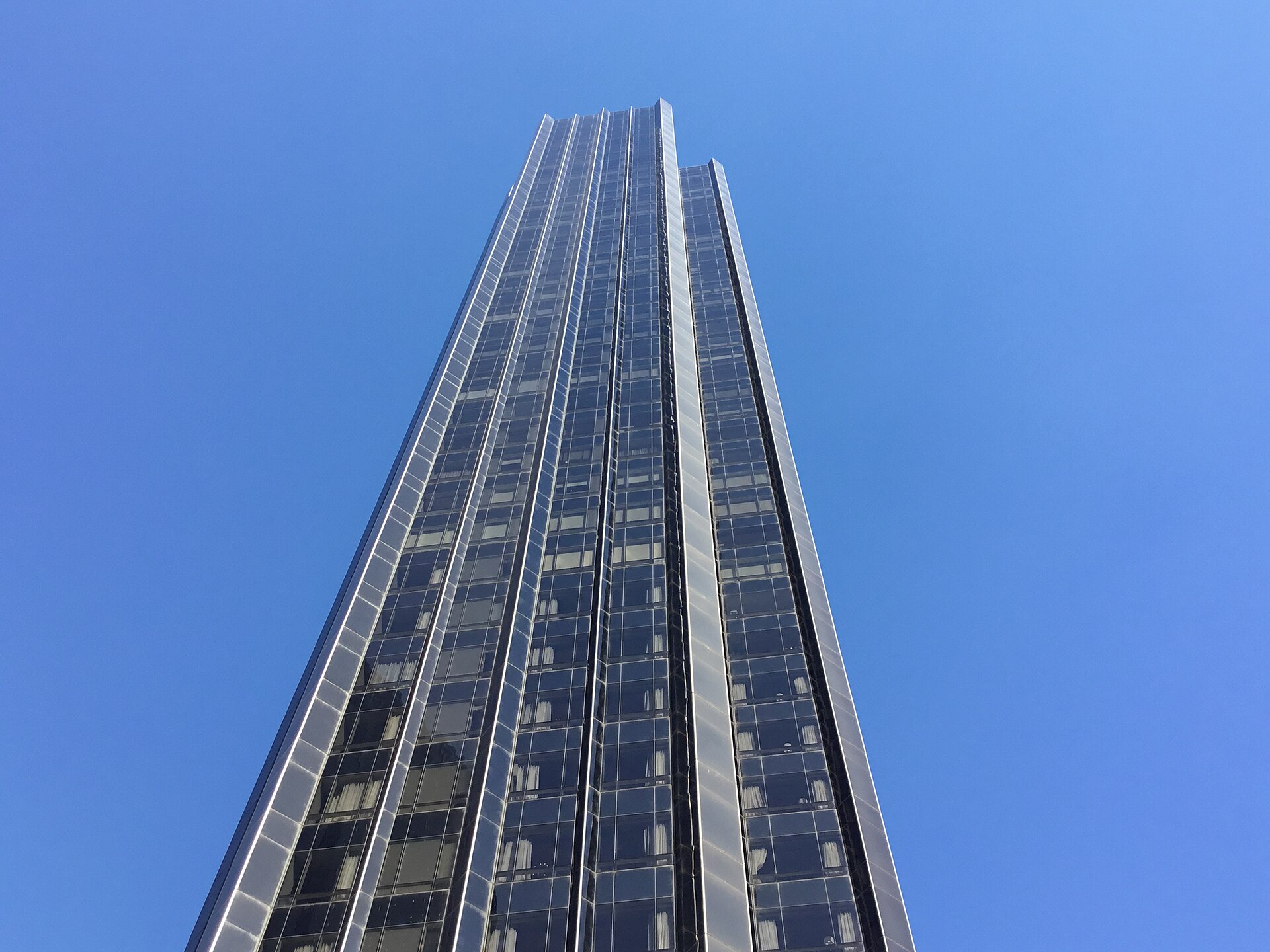
In 1995, the future US President made a phone call that almost nobody in the West talks about. He called a Feng Shui master. The story is in the New York Times. Here is what really happened — and why some of the biggest names in business still do the same thing today.
Donald Trump was about to open the Trump International Hotel & Tower at Columbus Circle, in the heart of New York. The building was beautiful. The location was perfect. There was one problem.
Trump wanted Asian buyers to fall in love with his apartments. And Asian buyers do not buy a home that feels wrong to them.
So Trump hired a Feng Shui master called Pun-Yin (her family name is Tin Sun). She walked through the building before it opened. She moved walls. She changed angles. She picked the day of the opening.
A few months later, the apartments were selling.
This is real. The story was reported by the New York Times in 1994, and again later. Trump talked about it openly. He said he did not fully understand Feng Shui — but he respected what it did for his business.
"You have to be open-minded. We're tapping into a billion-dollar Asian market." — Donald Trump, on hiring a Feng Shui master, as reported by the New York Times.
What is Feng Shui, in plain English?
Feng Shui (say it: fung shway) is a 4,000-year-old Chinese way of arranging a space — a home, an office, a building — so that energy moves through it in the right way.
The Chinese call this energy Qi (say: chee). You can think of it like air. If your home is built so the air gets stuck, you feel tired. If the air rushes out the back door, money slips out with it. If the air swirls in the right places, you sleep better, you focus better, the people in your home get along.
You do not have to believe in anything mystical. The rules are mathematical. They have been written down for thousands of years. They tell you where to put a bed. Where to face a desk. Which door to use. Which corner is best for money. Which corner is best for love. Which corners drain you.
Trump was not the first big name to do this
He was not even the first in his industry.
Steve Wynn — the man who built the Wynn casino in Las Vegas, the Wynn in Macau, and the Bellagio — has used Feng Shui in every casino he has ever built. He has talked about it on stage and in interviews. He has said it has made him billions, because his Asian high-roller clients can feel the difference between a room that has been done right and one that has not.
Disney built the same idea into Hong Kong Disneyland. The main entrance to the park was rotated by twelve degrees on the advice of a Feng Shui consultant. The ticket booths were placed in specific spots. Even the big rocks at the entrance were chosen for what they do to the energy of the site. The result? The park has been one of Disney's most reliable Asian properties from day one.
The most famous example of all sits in Hong Kong. The HSBC tower was built with Feng Shui from the first sketch. So was the Bank of China tower across the street. There is a famous story that the two banks have been in a quiet "Feng Shui war" for decades — the Bank of China tower has sharp angles that local masters say point energy at HSBC like blades, and HSBC responded by putting two giant cannon-like maintenance cranes on its roof, pointed back. This is not a joke. It is in every Hong Kong guide book.
These are not small companies. These are people with billions on the line. They use this because it works.
Why this matters for you
You are not building a casino. You are not putting up a hotel.
But you live in a home. You sleep in a bed. You sit at a desk. You walk in and out of rooms every single day of your life.
Every one of these spaces is acting on your energy — for you, or against you. Right now, today, you have no idea which.
Most people do one of two things:
- They arrange their home by guessing.
- They arrange their home by Pinterest.
Neither way takes into account the one thing that matters: you.
Feng Shui is personal. The right corner for money is not the same for everyone. Your best direction to sleep is different from your sister's best direction. The desk angle that helps you focus might be the angle that drains your husband.
This is why the rich hire a master. The master calculates the personal map for that exact person, in that exact space.
The map you can get for free
Inside the Sanctuary app, you get your personal Feng Shui map for free.
You enter your birth date one time. The app calculates your Kua number — a single digit, from 1 to 9, that the Chinese have used for two thousand years to find the four directions that help you and the four that hurt you.
You will see, in plain English:
- Where to face your desk for money.
- Where to point your bed for better sleep.
- Which wall your front door should open against.
- The two directions that drain your luck — and how to soften them.
This is the same map a paid master would draw on paper for you in a one-hour consultation. Many masters charge €200 to €500 for it.
You get it free, in two minutes, in the app.
Try it
You do not need to believe anything. You do not need to change your home today.
Just look at your map. See if you recognize yourself in it. See if the corner that has always felt heavy turns out to be one of your "avoid" corners. See if the chair where you do your best work happens to face one of your good directions.
Most people see something true in the map within thirty seconds.
That is when you understand why Trump made the call in 1995. Why Wynn keeps a master on retainer. Why Hong Kong has built skyscrapers around this for a hundred years.
It is not magic. It is a tool. The tool has been waiting for you for four thousand years.
Get your personal Feng Shui map
Free. Two minutes. The same map a master would draw for you in a paid consultation.
Open SanctuarySources
- The New York Times, "A Building Boom for the Spiritually Inclined", coverage of the Trump International Hotel & Tower and Master Pun-Yin's role, 1990s.
- Wall Street Journal coverage of Donald Trump's use of Feng Shui consultants for Asian-market real estate.
- Architectural press on Steve Wynn and Feng Shui design at Wynn Las Vegas, Wynn Macau and the Bellagio.
- Hong Kong architectural and tourism guides on the HSBC building (Norman Foster), the Bank of China tower (I.M. Pei) and the long-running Feng Shui dynamic between them.
- Press coverage of Hong Kong Disneyland's main-entrance rotation on Feng Shui advice during planning.
A full source library with quotes and links is maintained internally. Press inquiries: info@vallorani.uk.