The Perfumer, the Pianist, and the Path to Sanctuary
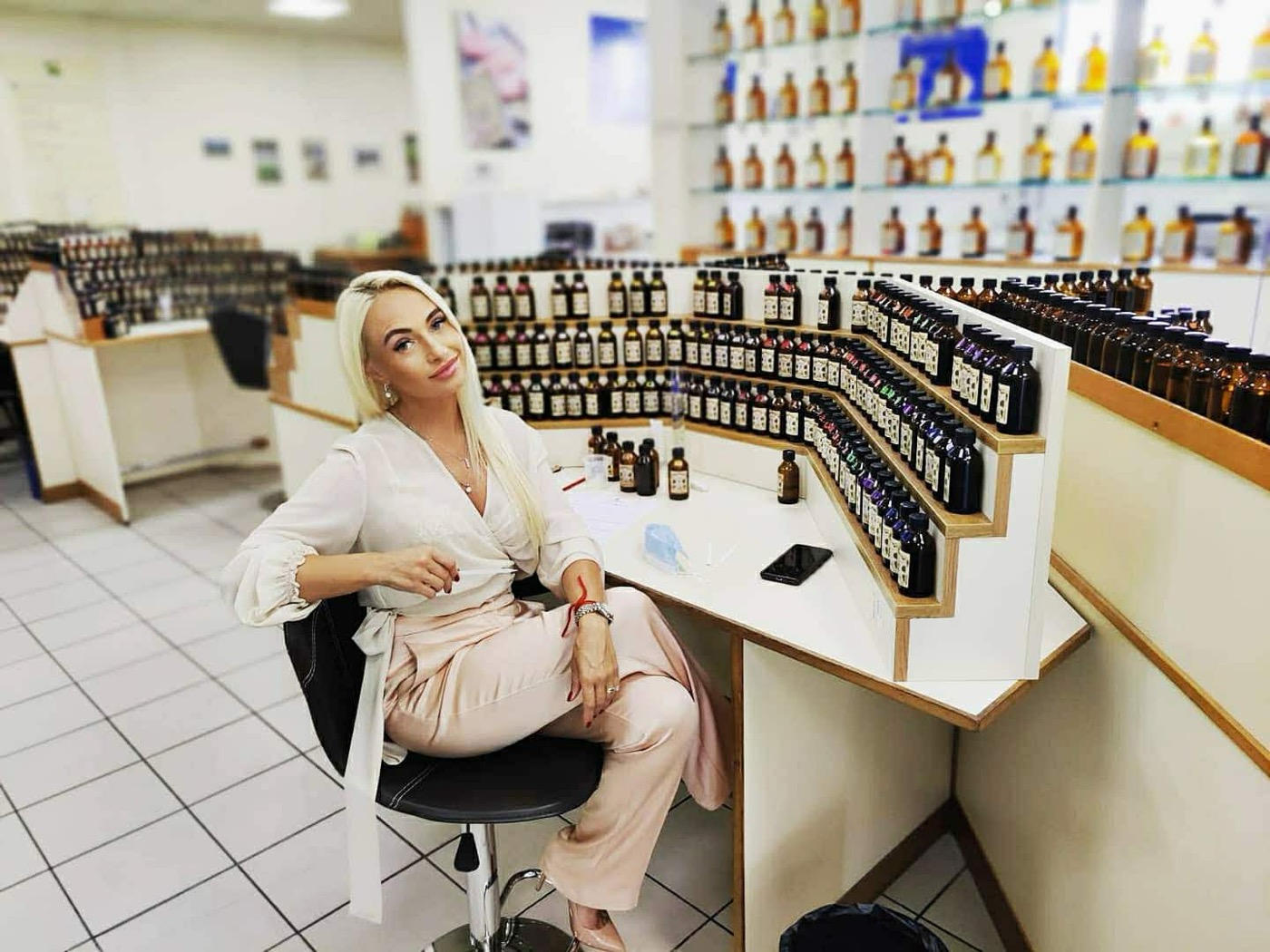
She is sitting at a curved wooden bench, surrounded by hundreds of amber bottles arranged in rows. Each holds a different olfactory world. The instructor says: top notes, heart notes, base notes. The building is Galimard, in Grasse — the oldest operating perfume house in the world, founded in 1747, the very place that inspired Chanel N°5. The woman at the bench is Indre Vallorani. It is 6 October 2020. Her husband has given her this afternoon as a gift. What happens next will change everything.
From Suvalkija to London
Indre is Lithuanian. She grew up in Suvalkija — the southern Lithuanian region, centered on Marijampolė — with the Baltic temperament — precise, interior, drawn to depth. Her first language was music. She studied piano from childhood through adulthood, learning to listen not just with her ears but with her whole body — to understand how a phrase builds, how tension resolves, how silence carries as much weight as sound.
Then came the move. Leaving Suvalkija, arriving in London with her daughter — a crossing that does what all real migrations do: it dismantles the version of yourself you were and forces you to discover, in a foreign city, who you actually are. London gave her new coordinates, new light, a new pace. And it brought Serafino — and through him, the French Riviera.
Galimard, Grasse, and the Gift That Started Everything
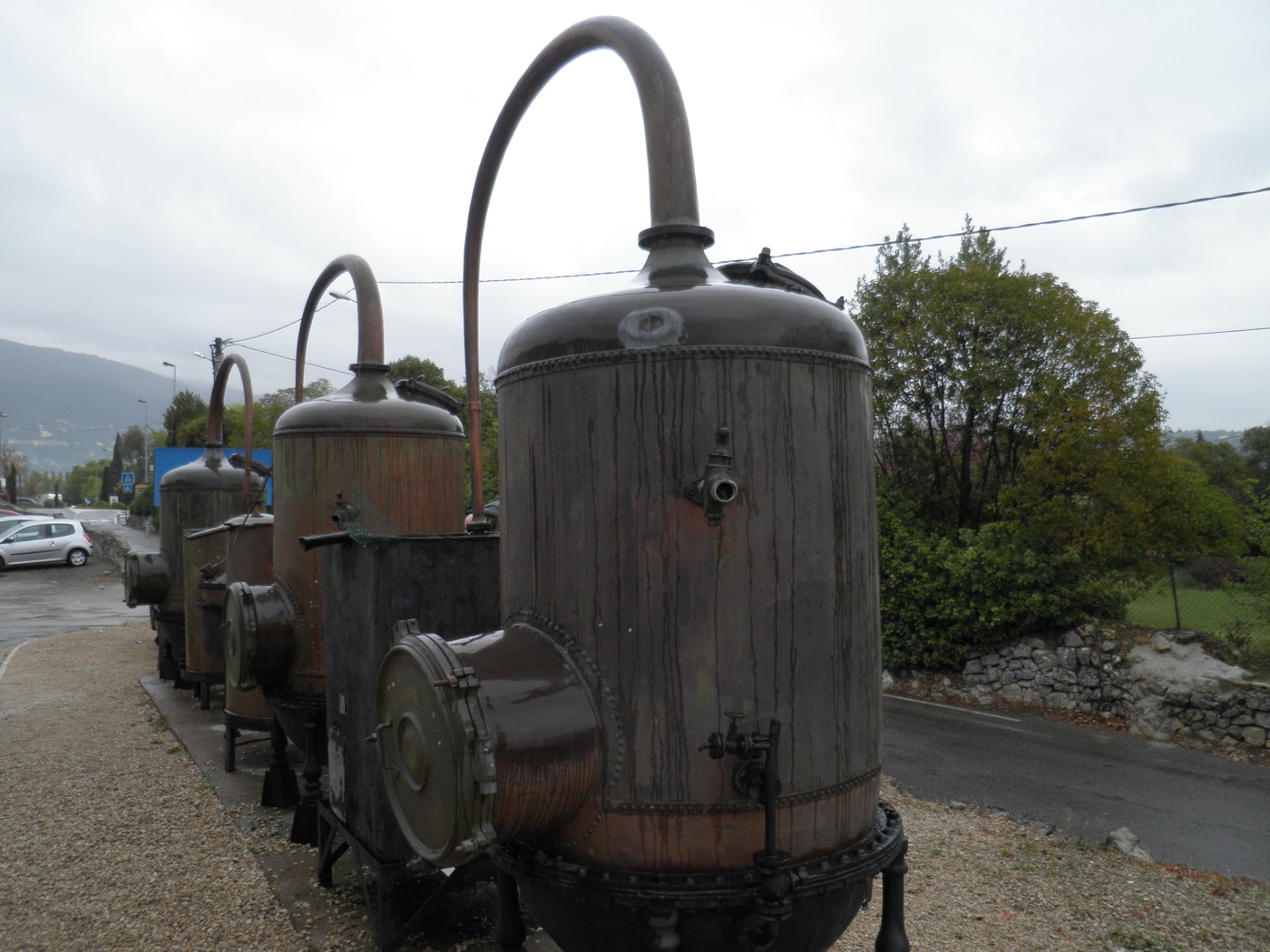
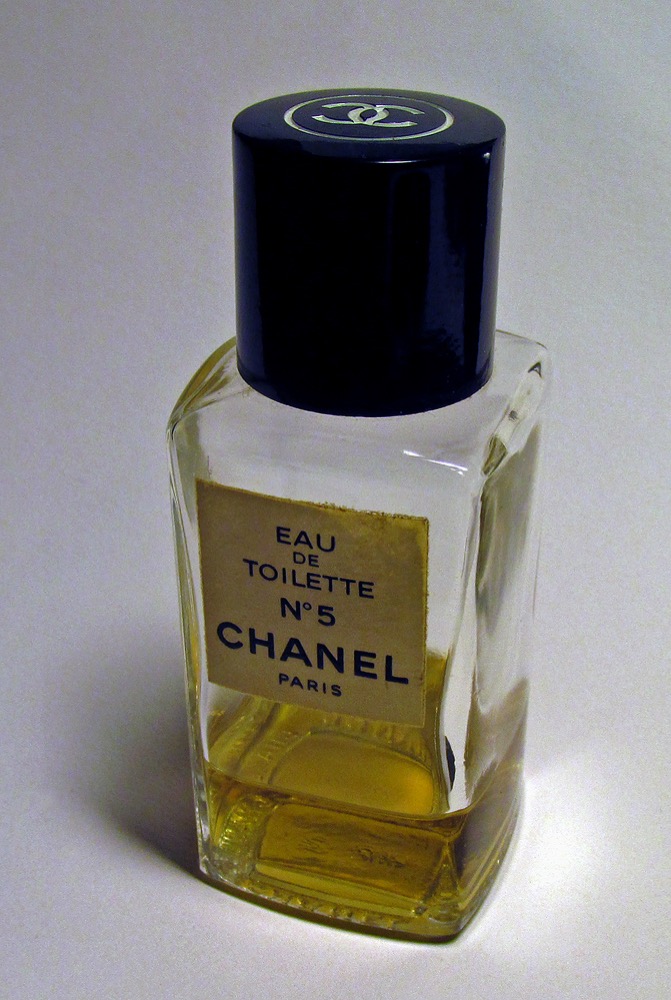
Grasse sits in the hills above the Mediterranean, a town built around fragrance. It is where Chanel N°5 was first conceived, where the jasmine and rose that define haute parfumerie grow in quantities found nowhere else in the world.
Serafino gave Indre a day at Galimard's Studio des Fragrances — a perfume creation course where the student sits at a curved bench lined with hundreds of raw materials and composes their own fragrance, guided by the maison's perfumers.
Then the instructor said something that stopped her.
Top notes. Heart notes. Base notes.
A structure built in time. An opening that catches attention, a middle that reveals character, a foundation that lingers long after everything else has faded. For someone who had spent a lifetime at the piano — who understood intimately the architecture of a sonata, the way a first movement introduces, a second develops, a third resolves — this was not perfumery. This was music. The same logic, the same grammar, two art forms built on an identical principle: that something beautiful has structure, and structure has layers, and layers take time to unfold.
Indre sat at that bench and composed her first perfume the way she would have written a piece of music: with intention, with ear, with an understanding of how things move.
The Problem — and the Obsession
She left Grasse with a formula and an official Diplôme d'Élève-Parfumeur from Galimard — a recognition that carries real weight in a region where perfumery is a living tradition.
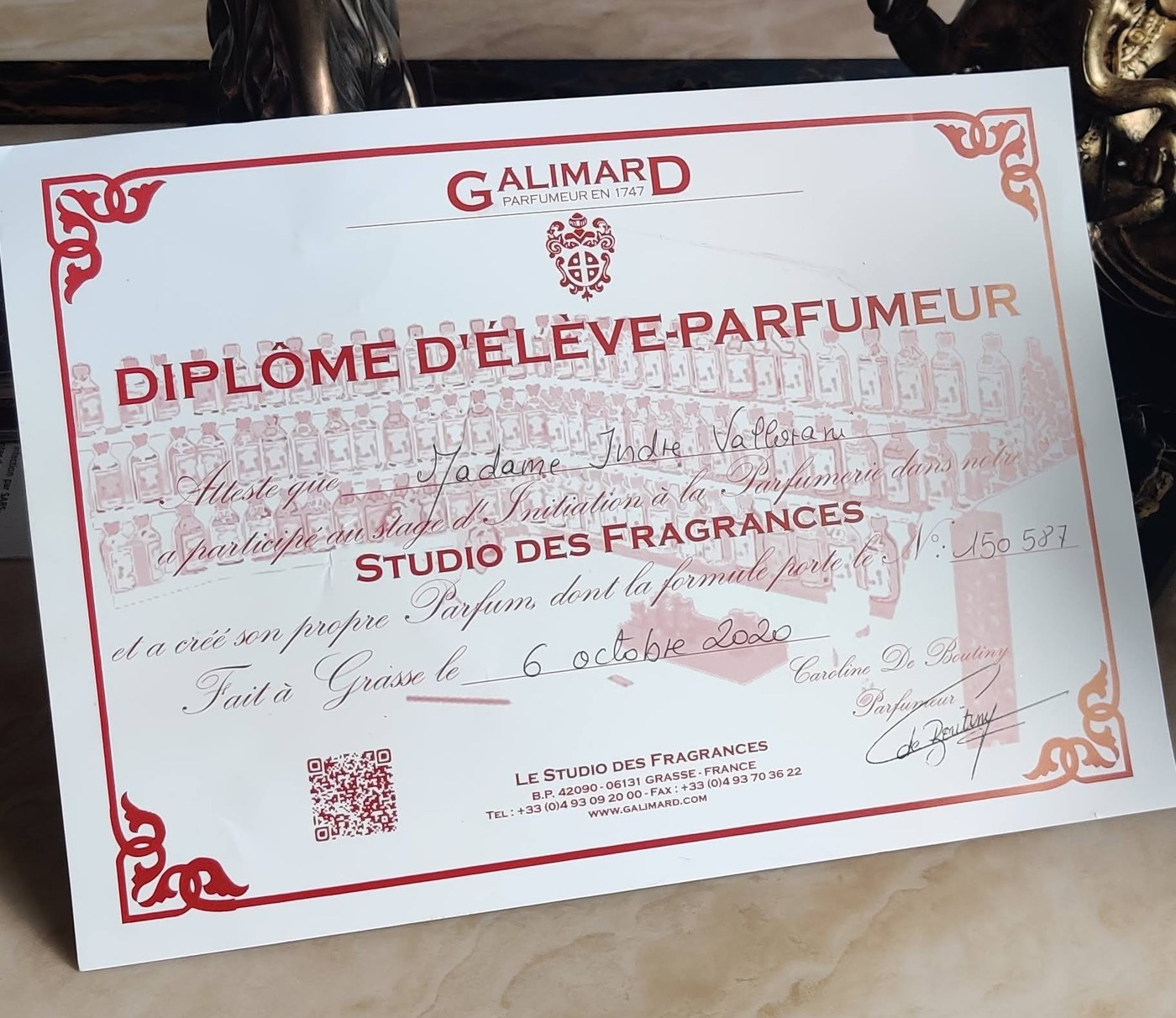
There was one complication. The oils used in Galimard's workshop are subject to French normative regulations on the commercial sale of essences. The French, as anyone who has navigated their regulatory ecosystem knows, are thorough. The formula she had composed there could not simply be bottled and sold.
This became the beginning of an obsession. Indre set herself the problem: replicate the formula. Work oil by oil, note by note. Adjust, test, adjust again. She got close with N°7. Then she went further, and created Fenix — a unisex fragrance, Serafino's favourite, complex and grounded. Then came Auge.
All natural oils. No synthetic chemistry. Made in France. A home fragrance line followed — made in Italy.
N°7 and Fenix are stocked at Ingredients Store in Prague and B2 Glamhaus in London. The Galimard certificate is framed. It is earned.
A Longer Thread: The Metaphysics
The perfumes are part of Indre's story. But there is an older thread running beneath them, one that began long before she met Serafino, long before London.
In 2007, she encountered The Secret by Rhonda Byrne. The Law of Attraction — the idea that consciousness shapes reality, that focused intention draws toward you what you seek. It was a first door opening, the kind that, once opened, cannot be closed.
She kept walking through. She studied esoteric traditions. She went deeper into the Law of Attraction. She encountered the Kabbalah. And then she found Feng Shui — and something clicked into place that changed the entire map.
What she saw, clearly, was this: the activations in Feng Shui — the specific placements, the timing, the directional alignments — were structurally identical to the manifestations in the Law of Attraction. Same mechanism. Different civilisation. Separated by millennia and a vast cultural distance, and yet: the same principle, applied with the same precision, toward the same end.
It was not coincidence. It was convergence.
She kept following the thread back toward its source. Bazi — the Chinese system of destiny analysis built on birth date and time. Qi Men Dun Jia — the ancient strategic system, used for thousands of years to navigate decisions, timing, and direction. The Chinese energetic calendar — a living map of time, shifting daily. All of it pointed backward, toward something older than any single tradition. The same water. Different vessels.
Sanctuary: Giving the Knowledge to Everyone
It was Serafino who saw what the calling could become. Not a private practice. Not a consultancy for a few. Something else: an app. A way to give this knowledge — the Bazi chart, the Feng Shui activations, the Qi Men Dun Jia, the Kua Number, the daily energetic calendar — to anyone who wanted it, wherever they were, in a form they could use every day.
That became Sanctuary.
Live with intention. Create with purpose. Align. Heal. Thrive.
Everything Indre spent years learning, piece by piece, from The Secret to the oldest cosmological texts of the Chinese tradition, is now accessible in one place. Not a horoscope. A system. Available on iOS and Android.