How to Use Your Kua Number Every Day: Desk, Bed, and Every Table That Matters
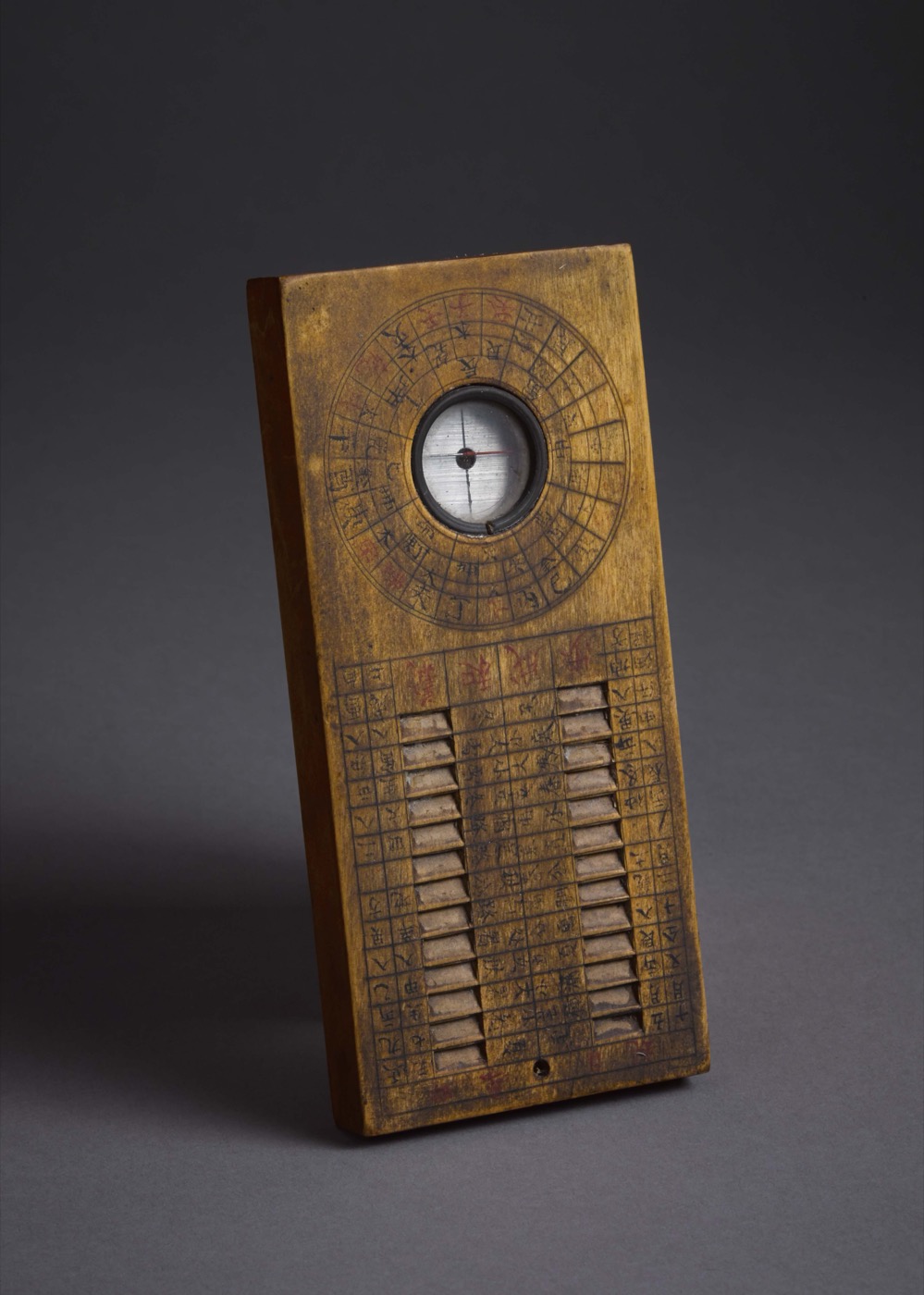
You calculated your Kua number. You know your four auspicious directions. Now comes the part most guides skip entirely — what to actually do with that information, room by room, decision by decision.
First: a quick reminder of your four directions
Each Kua number (1–9, excluding 5) gives you four positive directions and four negative ones. The four auspicious directions, in order of power:
- Sheng Chi — growth, wealth, ambition. Your strongest direction. Use it for work.
- Tian Yi — health and healing. Use it for sleep and rest.
- Yan Nian — relationships and harmony. Use it for conversations, meals, negotiations.
- Fu Wei — personal growth and clarity. Use it for study and meditation.
The rule that ties all of this together is deceptively simple: face your auspicious direction. Not sit near it. Not sleep vaguely toward it. Face it — with your body oriented so that the direction is in front of you.
The golden rule: what "facing a direction" actually means
In Ba Zhai, you receive the energy of the direction you face. If you are sitting at your desk facing North, you are drawing in northern energy.
So when Ba Zhai says your Sheng Chi is South: sit so that South is in front of you.
One practical implication: a solid wall behind you is almost universally considered supportive. The ideal arrangement is face your best direction, wall behind you. This is the mountain-and-water principle — support at your back, opportunity in front.
At your desk: Sheng Chi first
Your work position is the single most impactful place to apply your Kua number. You may spend six to ten hours here daily.
How to set up your desk:
- Open a compass app. Stand where you normally sit.
- Note which direction you currently face.
- Compare this to your Sheng Chi. If they match, you are already positioned well.
- If they don't, experiment with rotating your desk or chair. Even a rough alignment — within 45 degrees — has value.
If you work in an office you do not control, focus on seat choice in meeting rooms instead.
Windows and doors: face toward them, or back to them?
Doors: a door directly behind you (unseen) creates subconscious alertness that interrupts focus. Position yourself so you can see the main door without being directly in its path.
Windows: a window at your back can feel unsupportive. If your best direction requires a window behind you, add a high-backed chair or low bookshelf as a symbolic "mountain."
The priority order when conflicts arise:
- Face your auspicious direction
- Have support at your back
- Be able to see the main door
Your bedroom: Tian Yi and the direction you sleep
The principle here is the direction your head points while you sleep — not the direction you face.
If your Tian Yi is East, head points East (headboard against the East wall, feet toward West).
Practical notes:
- Check if your current sleeping direction aligns with any of your four auspicious directions. Even Fu Wei is better than an inauspicious one.
- A bed where your feet point directly toward the door is the single most disruptive arrangement in Ba Zhai. Fix this before anything else.
- For recovery or illness, prioritise Tian Yi for sleep above all else.
The dining table: Yan Nian for shared meals
At a rectangular dining table, each person ideally faces their own Yan Nian direction. For meals with important conversations, pay attention to which seat aligns you with your Yan Nian. Often this is simply switching which side of the table you habitually sit on — a small change with an observable effect on how conversations flow.
Meetings, negotiations, important conversations
Whenever you enter a meeting room where something consequential will be decided, you have a brief window to choose your seat. Use it.
- Sheng Chi for negotiations where you want to advance your position
- Yan Nian for conversations where you want to reach harmony and agreement
Identifying compass orientation in any room takes about thirty seconds. Most people never bother. Those who do carry an invisible advantage into every room they enter.
What about your four inauspicious directions?
In order of difficulty:
- Jue Ming — the most inauspicious. Avoid for sustained positions.
- Huo Hai — arguments, minor misfortune.
- Wu Gui — gossip, obstacles.
- Liu Sha — illness, loss.
A practical note: don't become anxious about every moment you happen to face an inauspicious direction. The system concerns itself with your sustained positions — where you work for hours, where you sleep, where you sit for decisions. Think of it like posture. Bad posture for thirty seconds causes no harm. Bad posture for ten years at a desk causes chronic pain.
Finding North without a compass
- Your phone compass app works in most situations.
- In the Northern Hemisphere, south-facing windows receive the most direct sunlight throughout the day.
- Google Maps shows north at the top — a quick look at the building's orientation can orient you before you walk in.
A practical 15-minute starting audit
- Calculate your Kua number if you haven't already — guide: Your Kua Number: the 30-second calculation
- Note your Sheng Chi and Tian Yi — these two have the highest daily impact
- Check your desk: open a compass, note which direction you currently face. If it's an inauspicious direction, experiment with adjusting your orientation.
- Check your bed headboard: which compass direction does your head point when you sleep?
- Note your bedroom door: can you see it from bed? Are your feet pointing directly toward it?
Five steps. Fifteen minutes. Most people find at least one significant misalignment — and at least one position they can change immediately.
The Kua number does not ask you to redecorate. It asks you to rotate — to choose, among the positions already available to you, the ones that work with your energy rather than against it.
Apply your directions room by room
The Sanctuary app calculates your personal Kua directions, shows all eight labelled and explained, and applies them to your daily reading — automatically, from your birth date.
Open SanctuarySources
- Ba Zhai (Eight Mansions) classical texts: the directional system is documented in the Yang Zhai San Yao and related classical Feng Shui manuals. The eight directional qualities (Sheng Chi, Tian Yi, Yan Nian, Fu Wei and their negative counterparts) are consistent across all major lineages.
- Contemporary practice references: Joey Yap, Feng Shui for Homebuyers — Interior; Lillian Too, Complete Illustrated Guide to Feng Shui; Raymond Lo, Feng Shui: The Pillars of Destiny.
- Academic context: Ole Bruun, An Introduction to Feng Shui (Cambridge University Press, 2008).
Press inquiries: info@vallorani.uk